
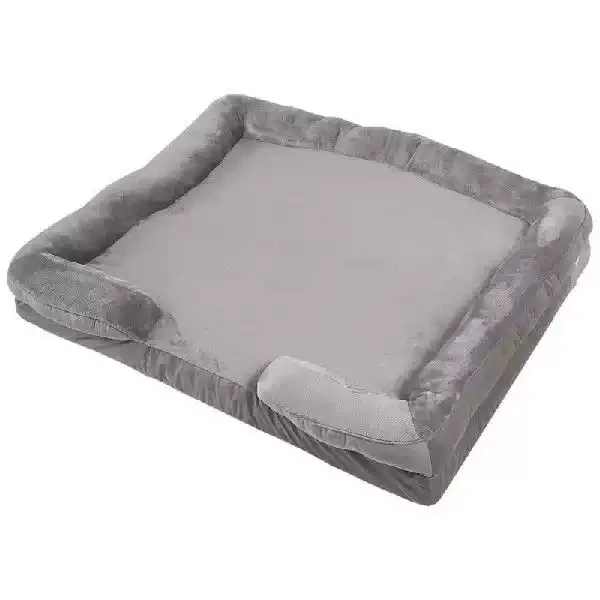
If your dog struggles to get comfortable, wakes up stiff, or constantly changes sleeping positions, it’s not “just age” — it’s often lack of proper support.
Dogs spend 12–18 hours a day sleeping. Puppies, senior dogs, large breeds, and anxious dogs may sleep even more. Yet many dogs rest on beds that flatten over time, trap heat, or offer no joint support at all.
This is where orthopedic dog beds make a real difference.
In this guide, you’ll learn:
What orthopedic dog beds really are
How they help with joint pain, anxiety, and sleep quality
Which dogs need them most
How to choose the right orthopedic bed
Why premium orthopedic beds outperform regular dog beds
If you care about your dog’s comfort, health, and long-term mobility, this guide is for you.
An orthopedic dog bed is designed to support your dog’s body, not just cushion it.
Unlike standard dog beds filled with cotton or cheap foam, orthopedic beds use high-density orthopedic or memory foam that:
Distributes weight evenly
Reduces pressure on joints and bones
Supports the spine and hips
Maintains shape over time
This type of support is especially important for:
Senior dogs
Large and giant breeds
Dogs with arthritis or joint stiffness
Dogs recovering from injury or surgery
Anxious dogs that struggle to relax
Orthopedic beds are not a luxury — for many dogs, they are a health necessity.
Sleep isn’t just rest. It’s recovery.
During deep sleep, your dog’s body:
Repairs muscles and joints
Reduces inflammation
Processes stress and anxiety
Strengthens the immune system
Poor sleep can lead to:
Increased joint pain
Reduced mobility
Behavioral issues
Anxiety and restlessness
Faster aging
Just like humans, dogs need proper alignment and pressure relief to reach restorative sleep stages.
Many dog owners don’t realize their dog is uncomfortable. Watch for these signs:
Difficulty standing up or lying down
Limping or stiffness after sleeping
Avoiding hard floors
Constant repositioning during rest
Restlessness at night
Pacing instead of sleeping
Choosing couches or human beds
Increased anxiety or irritability
If you notice one or more of these signs, upgrading to an orthopedic dog bed can make an immediate difference.
Joint pain is one of the most common issues in dogs — especially as they age.
Orthopedic foam works by:
Reducing pressure points
Supporting joints evenly
Preventing bones from pressing against hard surfaces
This is especially important for dogs with:
Arthritis
Hip dysplasia
Elbow dysplasia
Mobility issues
Previous injuries
While orthopedic beds are not medical treatments, they play a major role in comfort management and pain reduction.
Comfort isn’t only physical — it’s emotional.
Many orthopedic dog beds include:
Raised edges or bolsters
Nest-like shapes
Enclosed or donut designs
These features create a sense of security, which helps anxious dogs:
Feel protected
Relax faster
Sleep longer
Reduce stress behaviors
Dogs with separation anxiety, rescue dogs, and puppies often respond especially well to calming orthopedic beds.
| Feature | Regular Dog Bed | Orthopedic Dog Bed |
|---|---|---|
| Support | Minimal | High-density support |
| Pressure Relief | Poor | Excellent |
| Durability | Flattens quickly | Retains shape |
| Joint Health | No support | Designed for joints |
| Sleep Quality | Light sleep | Deep, restful sleep |
If your dog sleeps every day (they do), the difference adds up fast.
Aging dogs lose muscle mass and joint flexibility. Orthopedic support helps reduce morning stiffness and pain.
Larger dogs put more pressure on joints. Standard beds often compress completely, offering no real support.
High-energy dogs need proper recovery after exercise to avoid long-term joint damage.
Calming designs combined with pressure relief create a safe resting space.
Proper sleep support speeds up recovery and reduces discomfort.
Not all orthopedic beds are created equal. Here’s what to look for:
Choose:
High-density orthopedic foam
Memory foam with real thickness
At least 5–10 cm depth depending on dog size
Avoid:
Cheap egg-crate foam
Thin padding
Your dog should be able to:
Fully stretch out
Curl up comfortably
Rest without hanging off edges
Measure your dog while sleeping for best fit.
Dogs shed, drool, and bring dirt inside. A washable cover is essential.
Prevents sliding on tile or wood floors and improves safety.
Avoid beds that trap heat — especially for warm climates.
At Fluffivo, we believe your dog deserves more than “just a bed”.
Our orthopedic dog beds are designed with:
High-density orthopedic foam for lasting support
Calming, raised edges for security
Soft, skin-friendly fabrics
Non-slip base for safety
Easy-care, removable covers
Every detail is built for comfort, durability, and peace of mind.
Pet parents often report:
Dogs falling asleep faster
Less stiffness in the morning
Reduced nighttime restlessness
Improved mood and energy
Fewer attempts to climb onto furniture
Better sleep changes behavior — and quality of life.
Many dogs adapt to orthopedic beds within a few days.
For older dogs or dogs with joint pain:
Initial comfort improvements: 3–7 days
Long-term benefits: 2–4 weeks
Consistency matters. Make the orthopedic bed your dog’s primary sleeping space.
No. Prevention is better than treatment. Young dogs benefit too.
Yes — especially large-breed puppies.
Yes, especially calming or bolster designs.
When you consider daily use and long-term health, absolutely.
Your dog gives you loyalty, love, and companionship every day.
The least we can do is provide:
Proper support
Real comfort
A safe place to rest
An orthopedic dog bed isn’t just a product — it’s an investment in your dog’s well-being.
Better sleep leads to:
Better health
Better mood
Better quality of life